
Lead Service Line Replacement
What is lead?
Lead is a naturally occurring element found in small amounts in the earth’s crust. It is also a toxic, soft metal that can be found in paint, dust, air, soil, food, and water, and can be harmful to human health. There is no safe level of exposure to lead in drinking water.
What is a water service line?
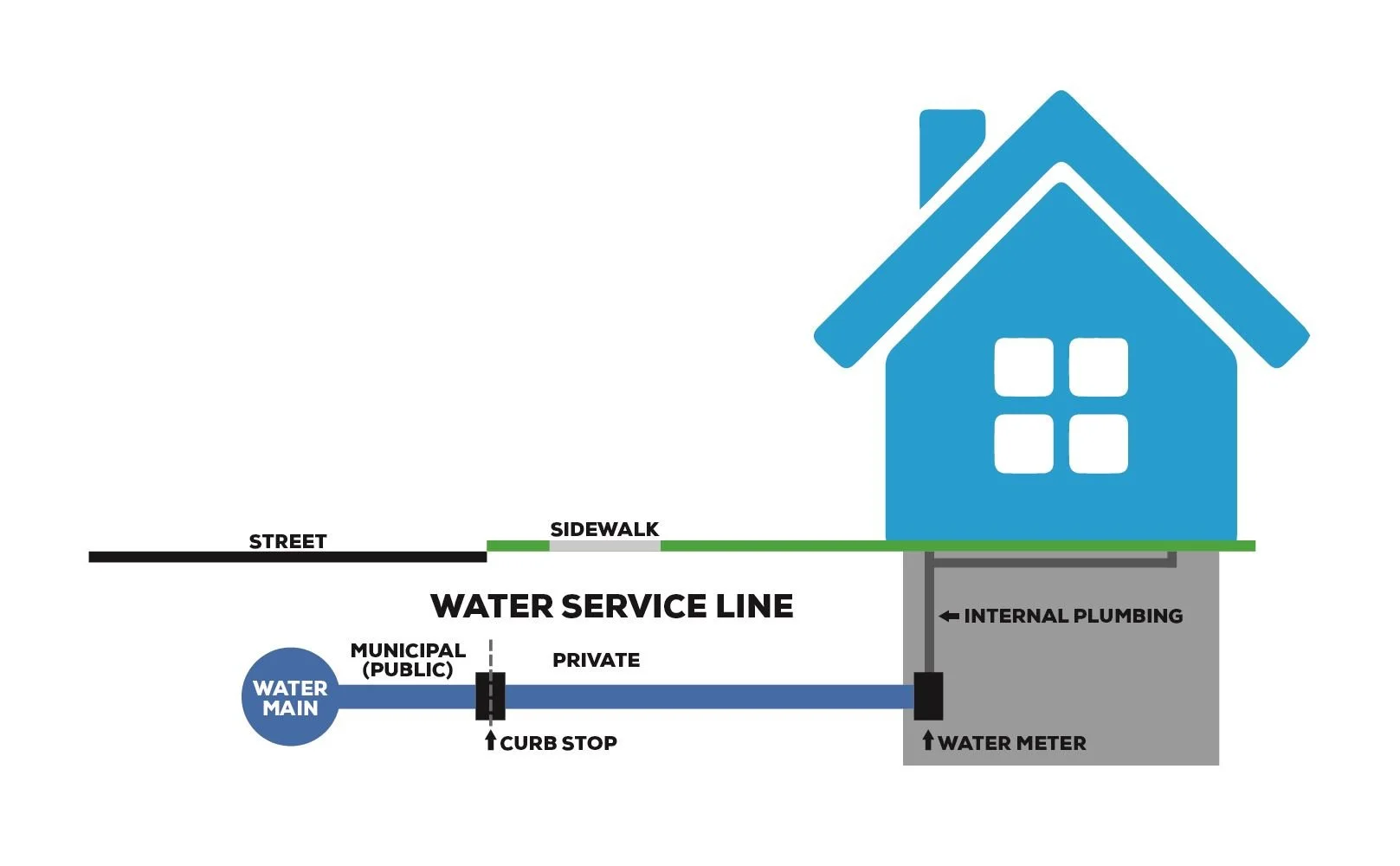
A water service line is the pipe that connects the water main to your home. Service lines may be made of many types of materials. If any portion of the pipe is made of lead, it is called a lead service line (LSL).
Why is lead a health concern?
Exposure to lead in drinking water can cause serious health effects in all age groups. Infants and children can have decreases in IQ and attention span. Lead exposure can lead to new learning and behavior problems or exacerbate existing learning and behavior problems. The children of women who are exposed to lead before or during pregnancy can have increased risk of these adverse health effects. Adults can have increased risks of heart disease, high blood pressure, kidney, or nervous system problems.
How do I know when drinking water contains lead?
The only way to know for certain whether drinking water contains lead is to have it tested by a certified laboratory. The North Shore Health Department provides drinking water test kits. To request a kit or get more information, contact [insert contact]. After the sample is mailed, the Wisconsin State Laboratory of Hygiene will bill the resident directly for analysis.
How does lead get into drinking water?
Lead can enter drinking water when plumbing materials that contain lead break down. The most common sources of lead in drinking water are lead pipes, faucets, and fixtures.
How do I know if my home has a lead service line or lead plumbing?
1) You can see the current lead service line material record of your service by locating your address in the municipalities current inventory.
Brown Deer: Water Utility | Brown Deer, WI
River Hills: No Lead Service lines.
Bayside: No Lead Service lines.
Fox Point: Water Utility | Fox Point, WI - Official Website
Glendale: Lead & Copper Water Treatment | Glendale, WI
Whitefish Bay; Lead Service Line Replacement Project | Whitefish Bay, WI
Shorewood: Lead Service Lines | Shorewood, WI - Official Website
2) EPA has developed an online step-by-step guide, Protect Your Tap, to help people identify lead pipes in their homes. The online tool is located at www.epa.gov/pyt.
Who owns the lead service line?
Lead service lines (LSLs) are owned by both water utilities and property owners. Typically, the water utility owns the portion of the service line from the water main to the curb stop, while the property owner owns the remaining section from the curb stop to the building. This shared ownership structure means that both entities have a responsibility for the maintenance and/or replacement of the service lines to ensure public health and safety.
Is water the only source of lead in homes?
No. While water is a source of exposure to lead in houses, lead-based paint, dust, contaminated soil, and some toys and jewelry may also contain lead. For more information on protecting your family from lead in your home, please visit: https://www.epa.gov/lead/protect-your-family-sources-lead
What can I do to reduce my exposure to lead from my drinking water?
Below are recommended actions if you are concerned about lead in your drinking water.
Have your water tested
Contact [insert contact] to obtain a drinking water test kit and to learn more about the lead levels in your drinking water.
Run your water
The more time water has been sitting in your home’s pipes, the more lead it may contain. Before drinking, flush your home’s pipes by running the tap, taking a shower, doing laundry, or doing a load of dishes.
Use cold water
Only use cold water for cooking, drinking, and making baby formula. Hot water dissolves lead more quickly than cold water.
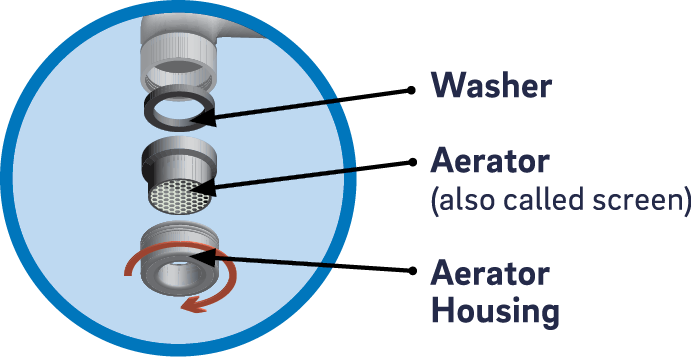
Clean your aerator regularly
Aerators are small attachments to faucet tips which regulate water flow. Your aerator can accumulate lead particles which can contaminate your water so it should be cleaned regularly.
Use your filter properly
If you use a filter, make sure that is certified by a third-party certifier to remove lead. Check the filter and cartridge packaging for these certifications. Read the directions to learn how to properly install and use your cartridge and when to replace it.
Get your child tested to determine blood lead levels
In the state of Wisconsin, blood lead level testing is recommended for all children at:
One year old
Two years old
Between three and five without a previous test
Your child’s primary health care provider can do the test. You can also ask your local WIC clinic about testing. Visit https://www.dhs.wisconsin.gov/wic/apply.htm to find the WIC office nearest you. Lead tests are paid for by most insurance plans. Testing for Medicaid-eligible children is required and paid for by Medicaid. The Centers for Disease Control and Prevention recommends that public health actions be initiated when the level of lead in a child’s blood is 3.5 micrograms per deciliter (µg/dL) or more.
For more information on reducing lead exposure around your home or building and the health effects of lead, contact the North Shore Health Department at (414) 371-2980 or visit the EPA’s Lead webpage at